Blogs / Can You Trust the 'Recycled' Claim on Your Diwali Gift?
Can You Trust the 'Recycled' Claim on Your Diwali Gift?
Every festive season brings a wave of “recycled plastic” claims on gift packaging, and most buyers nod along without asking what backs them up. This year, that question has a sharper answer than usual, and it isn’t reassuring.
The scale this season
A Redseer report cited by The Week projects online retail growing 25% in the 30 to 35 days leading up to Diwali this year, up from 16% last year, after what the report calls the strongest first half for online retail in four years. That means more parcels moving through courier networks this month than in any festive season on record, each one wrapped in something, often something claiming to be recycled plastic.
What the numbers actually show
Sunita Narain, who heads the Centre for Science and Environment and edits Down To Earth, laid out the problem in a column published this September. India’s Extended Producer Responsibility system reports 17 million tonnes of plastic packaging recycled since 2022, a trade she values at roughly Rs 2,500 crore. Behind that figure sit 41,544 producers, importers and brand owners registered in the system, reporting their own numbers. The CPCB estimates the cost of plastic waste recycling at Rs 4,000 a tonne, while CSE’s research puts the real cost of recycling category 2 plastic at Rs 4,000 to Rs 6,000 a tonne. Recyclers are credited far less, around Rs 1,500 a tonne for flexible plastic. Someone is absorbing that gap, or the number being reported isn’t quite what it claims to be.
The part that matters most for anyone trying to check this themselves: as of 28 June 2026, the EPR portal holding this data is open only to what Narain calls “a closed group of users.” Not the public. Not fully to researchers. She also points to a 2024 analysis by her own CSE colleagues of Agra’s drains, where branded plastic packaging made up 70% of what they pulled out. Recycling claims and visible reality don’t always meet in the middle.
How this connects to the audit rules
We wrote last month about the 2026 amendment that replaces self-declared EPR compliance with independent audits, a direct response to CPCB’s own 2023 disclosure of roughly 700,000 fake compliance certificates. That audit requirement is a real fix, on paper. But an audit is only as good as the data it’s checking, and Narain’s column says that data still isn’t open enough to verify from the outside. The rule changed. Access didn’t, not yet.
What this means if you’re ordering gifts right now
None of this means every “recycled” claim on a gift box is false. It means you, as a buyer, have no practical way to check one before Diwali on Sunday, 8 November. So don’t try. Ask a different question instead: was this ever plastic-packaged to begin with? A hamper boxed in cloth, a pencil wrapped in a kraft sleeve, a notebook with a seed-paper cover, none of that runs through the EPR credit system at all, because there’s nothing plastic to report. It sidesteps the entire self-reporting question, portal access included.
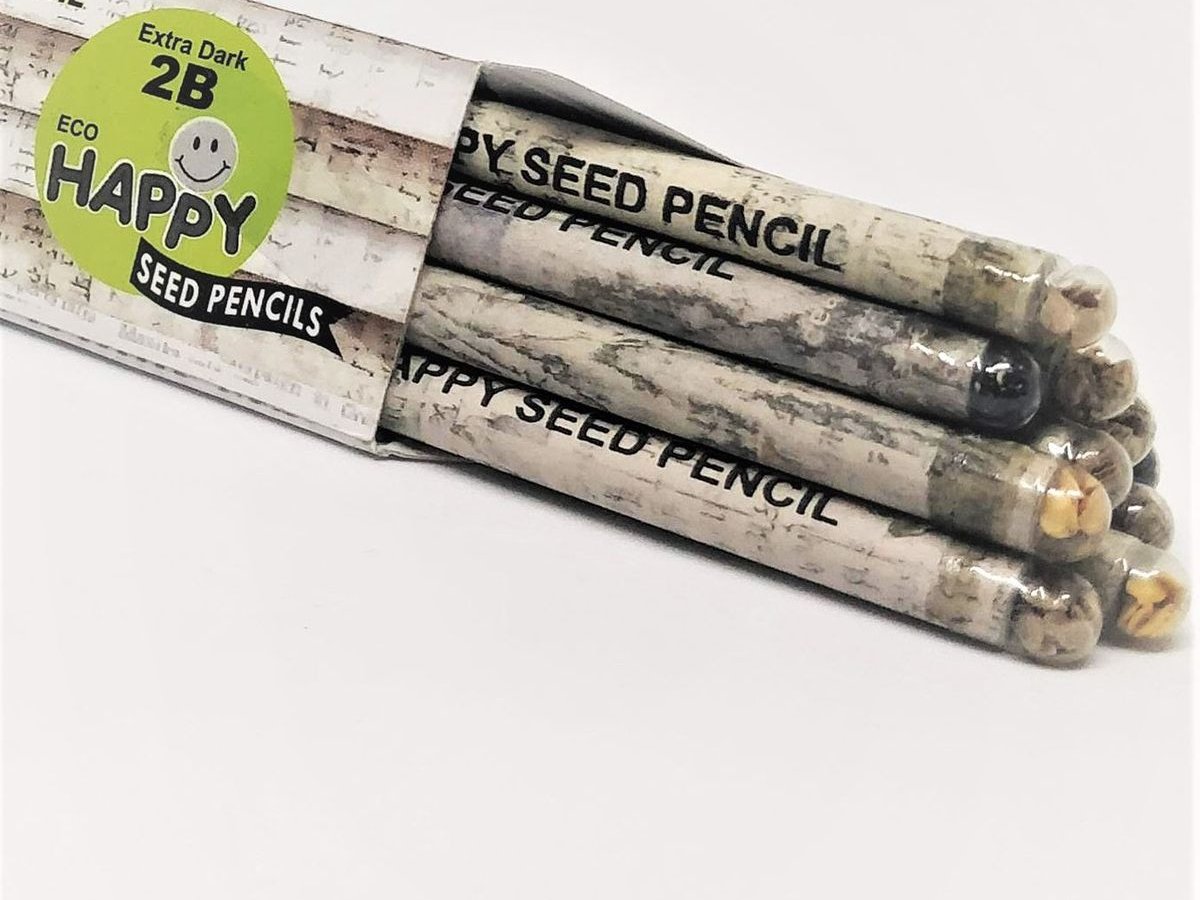
That’s the logic behind how we pack things in our own Pune workshop, paper first, plastic only when there’s really no other option. Our bulk seed pencils, the kind companies order by the hundred for Diwali hampers, ship the same way. If you’re weighing a bulk switch for a client or employee gifting list this season, our impact calculator runs the plastic and CO2e numbers against the usual plastic-pen alternative. Our corporate gifting page has the bulk pricing and lead times.
Recycling isn’t the enemy here. An unverifiable recycling number standing in for an actual answer is the problem, and this festive season, that number is harder to check than it has been in years.
Frequently asked questions
Can I check whether a 'recycled plastic' claim on gift packaging is accurate?
Not easily, as of now. India's EPR data on plastic packaging recycling is largely self-reported by registered producers, importers and brand owners, and the government's EPR portal has been restricted to a closed group of users since 28 June 2026, according to Centre for Science and Environment director Sunita Narain's September 2026 column in Down To Earth.
Why don't India's plastic recycling numbers add up?
Research by the Centre for Science and Environment, cited in Sunita Narain's September 2026 column in Down To Earth, puts the real cost of recycling category 2 plastic at Rs 4,000 to Rs 6,000 a tonne, but recyclers are credited only around Rs 1,500 a tonne for flexible plastic under the EPR scheme. That gap between real cost and what gets paid raises real questions about how 17 million tonnes of recycling since 2022 gets reported at the stated price.
Did last month's plastic rules update fix this problem?
The 2026 amendment's shift to independent audits instead of self-certification is a real fix on paper. But audits depend on accessible data, and as of this September, that data still is not open to outside verification, so the fix cannot be fully tested from outside yet.
What should I ask a gifting vendor instead of asking about recycled content?
Ask what the packaging is actually made of. If it has never been plastic, paper, kraft, cloth or seed paper, there is nothing to self-report under the EPR scheme and nothing you need to verify.
Is Eco Happy's own packaging plastic-free?
We pack orders in paper and use plastic only when it cannot be avoided, the policy stated on our homepage and About page. The pencils themselves, including our bulk seed pencils and newspaper pencils, are made from 100% recycled newspaper with no plastic in the product at all.