Blogs / The 70% Textile Recovery Number Behind Your Gift Bag
The 70% Textile Recovery Number Behind Your Gift Bag
Someone hands you a gift bag this festive season and mentions it’s made from “recycled fabric.” You nod, feel a little better about the whole transaction, and don’t ask what that actually means. A report the Ministry of Textiles released this year gives that feeling a real number for the first time. The number is better than you’d guess. It’s also messier.
What the report counted
India generates about 70.73 lakh tonnes of textile waste every year, a little over 7 million tonnes, according to the ministry’s “Mapping of Textile Waste Value Chain in India,” released in March 2026. Of that, 42% comes from factories, offcuts and trimmings that never became a finished garment. The remaining 58% is what households throw away.
More than 70% of all of it, the report says, gets “recovered and routed into recycling, upcycling, downcycling or reuse streams.” Four different words, doing the work of one statistic.
The gap the headline skips over
Split that 70% by where it comes from and the picture changes. About 95% of pre-consumer waste, the factory offcuts, gets recovered. India’s spinning sector runs close to fully closed loop, with nearly all of its own waste reintegrated into production on the spot.
Post-consumer waste, the stuff that leaves your house, tells a different story. Only around 55% of it gets diverted from landfill. Most of that happens through an informal collection and sorting network that the report says sustains 40 to 45 lakh livelihoods, mostly women from marginalised communities. They do the sorting by hand.
Average a system that’s basically solved with one that’s barely past halfway, and you get a single tidy percentage. It’s not wrong. It’s just doing a lot of rounding.
Recycling, upcycling and downcycling are not the same word
The 70% figure doesn’t separate these three, and the difference matters. Downcycling takes a fabric offcut and turns it into something lower-value, like stuffing or industrial wiping cloth. That’s useful, and it keeps material out of a landfill, but it’s not the same product living a second life. It’s a different, lesser one.
Upcycling takes the same offcut and turns it directly into something new and just as useful, no shredding first. A patch of leftover cotton becomes a bag instead of becoming filler.
The government’s figure bundles both under “recovered,” so a label reading “made from recycled fabric” could describe either process. Nothing currently requires an Indian seller to say which one happened before the fabric reached you. That’s different from where India’s plastic packaging rules are headed, which we wrote about last week: recycled-content targets there are at least measured against a number a regulator checks. Fabric has no equivalent yet.
What happens to our own offcuts
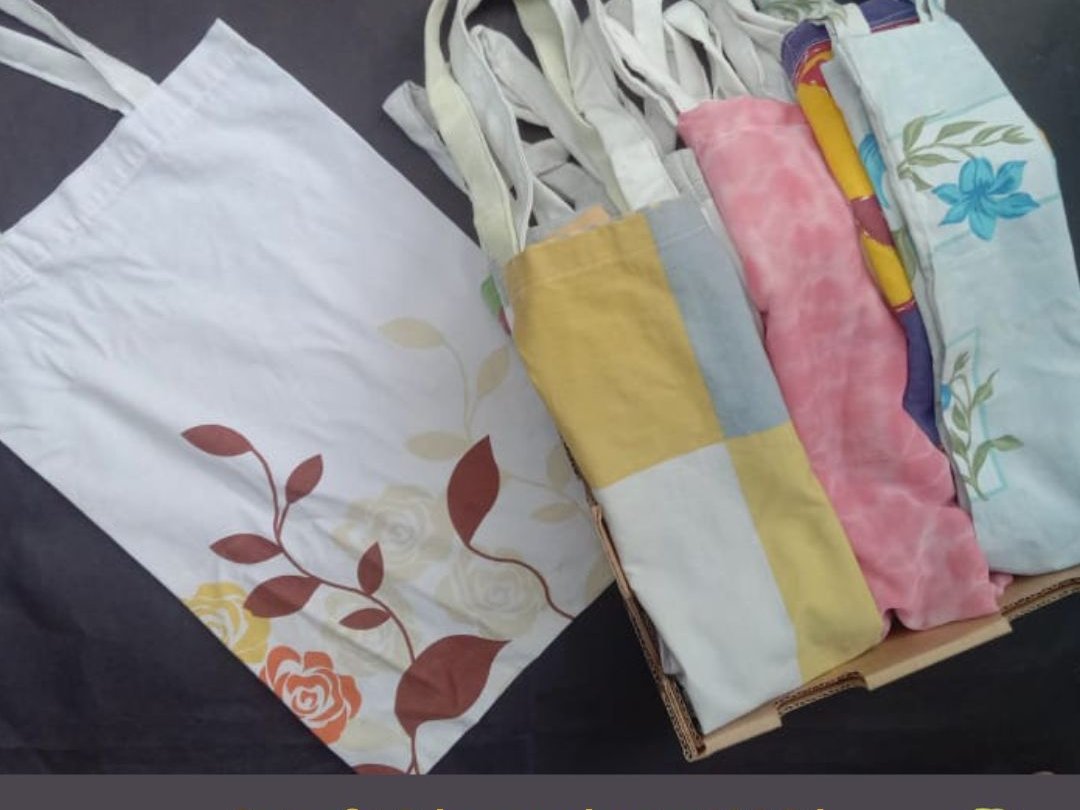
We can only speak for our own workshop, so here’s what that looks like. Our upcycled cloth bags are cut and stitched in Pune by our women-led production team, directly from reclaimed fabric offcuts. One step: offcut to finished bag, nothing shredded or blended into a generic material first. It’s why no two bags in a set look quite the same. Each one comes from whatever fabric happened to be left over that week.
That puts it in the first category above, not the second. We’re not claiming this makes us better than every other seller of “recycled” gifts. We’re saying it’s a specific enough process that you can ask us how it works and get an answer, not a shrug.
What to ask before you believe the label
If a gift, corporate order or festive hamper this year comes wrapped in something described as recycled or upcycled fabric, ask one question: was this turned directly into what you’re holding, or broken down and rebuilt into something else first? Neither answer makes the product bad. But they’re different processes with a different footprint, and a seller who can describe which one happened is telling you more than any tag will.
Weighing that kind of switch for a client list or an event? Our impact calculator runs the plastic and CO2e numbers for pens, notebooks and hampers against everyday alternatives, on the same principle: a specific number beats a comforting word. And if a fabric label’s claim still feels vague, we’ve written before about what actually separates a real sustainability claim from one that just sounds like it.
The same Ministry report expects India’s textile recycling market to reach USD 3.5 billion by 2030, with room for around a lakh new green jobs. Getting there without the four words blurring back into one might be the harder part.
Next time a tag says “recycled fabric,” don’t ask whether to believe it. Ask which of four different things it’s quietly describing.
Frequently asked questions
How much textile waste does India generate each year?
About 70.73 lakh tonnes a year, a little over 7 million tonnes, according to the Ministry of Textiles' "Mapping of Textile Waste Value Chain in India," released in March 2026. Roughly 42% comes from factories and 58% from what households throw away.
What percentage of India's textile waste actually gets recycled?
The report says more than 70% is "recovered and routed into recycling, upcycling, downcycling or reuse streams," but it doesn't break down how much falls into each of those four categories. The figure describes several different processes at once, not just one.
Is factory textile waste handled differently from household textile waste?
Yes, and the gap is large. About 95% of pre-consumer factory waste gets recovered, and India's spinning sector runs close to fully closed loop. Only around 55% of post-consumer household waste is diverted from landfill, mostly through informal collection and sorting networks the report says sustain 40 to 45 lakh livelihoods.
What's the real difference between upcycling and downcycling?
Upcycling turns a fabric offcut directly into a new, equally useful product with no shredding first. Downcycling breaks it down into something lower-value, like stuffing or industrial wiping cloth. Both keep fabric out of a landfill, but they aren't the same outcome, even when a label calls either one "recycled."
Are Eco Happy's upcycled cloth bags actually upcycled, not downcycled?
Yes. They're cut and stitched in Pune by our women-led production team directly from reclaimed fabric offcuts, in one step, with nothing shredded or blended first. That's why no two bags in a set look quite the same.